

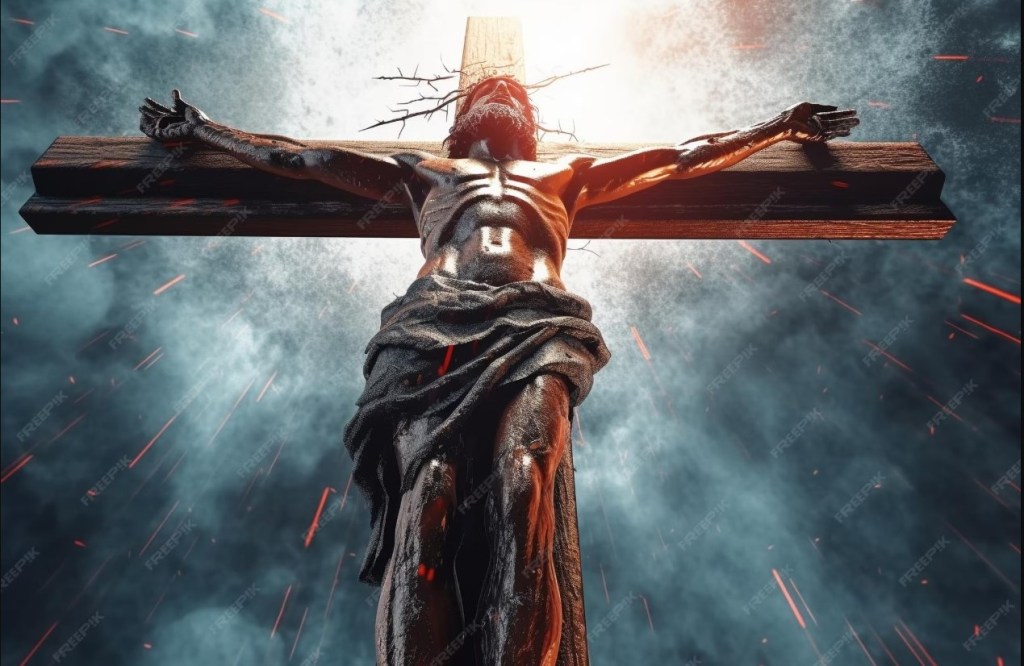
Jesus’ final word on the Cross: τετέλεσται (“It is finished,” John 19:30 in Gospel of John), is not a cry of defeat, but a proclamation dense with meaning. The Greek term tetelestai comes from teleō, meaning “to bring to completion, to fulfill, to accomplish a purpose.” In the world of the first century, this word resonated across several domains: business, courtroom, and battlefield.
1. In the World of Business: “Paid in Full”
In commercial usage, tetelestai was written across receipts to indicate that a debt had been fully paid. Theologically, this reveals that Christ’s death is not partial, it is complete satisfaction. Humanity’s “debt” of sin is not negotiated or postponed, but entirely settled. There is no remaining balance.

Insight for life:
Many people live as if they must constantly “earn” worth, through success, performance, or moral perfection. But tetelestai declares: your ultimate value is not achieved, but received. Psychologically, this frees us from perfectionism and chronic guilt. Spiritually, it invites us to live not from anxiety, but from gratitude.
2. In the Courtroom: “Case Closed”
In legal contexts, tetelestai signified that a sentence had been fully carried out. Justice had been satisfied; no further penalty remained.
In John’s Gospel, Jesus stands as both judge and judged. His final word proclaims that the demands of justice are fulfilled. Condemnation no longer has the last word.

Insight for life:
Human beings often remain trapped in inner “courtrooms,” replaying failures and condemning themselves. Yet, tetelestai speaks against this endless self-accusation: the final verdict is not condemnation, but completion. This does not deny responsibility, but transforms it, calling us from shame into restored identity.
3. On the Battlefield: “Victory Won”
In military language, a form of teleō could be used to announce that a mission had been successfully accomplished.
Paradoxically, the Cross, an instrument of execution, becomes the site of victory. Not a victory of force, but of self-giving love over sin, evil, and death.

Insight for life:
We often define victory as control, dominance, or visible success. But in Christ, victory is redefined as faithfulness to love even unto suffering. This challenges our instincts: sometimes the greatest “wins” in life look like loss, choosing integrity over advantage, forgiveness over revenge, perseverance over escape.
Dear friend,
Across these three dimensions, tetelestai reveals a unified truth:
- Nothing more needs to be added (business)
- Nothing more needs to be paid (courtroom)
- Nothing more needs to be won (battle)
What remains is not achievement, but participation.
Thus, to live tetelestai today is to:
- Stop striving for a worth already given
- Release the need to condemn oneself or others
- Redefine success as faithful love
In the end, Jesus’ final word is not about an ending, but a fulfilled beginning, an invitation to live from a work already brought to completion.
With love,
Little-pencil’s research and reflection
 Little-pencil